
Glutenintolerant and reacting to the weightless molecules that travel through the air?
You can’t even walk down the bread aisle in the grocery store without getting glutened when breathing the air?
You are not alone
Let’s create a community for support and understanding
VOCs vs. Gluten Particles
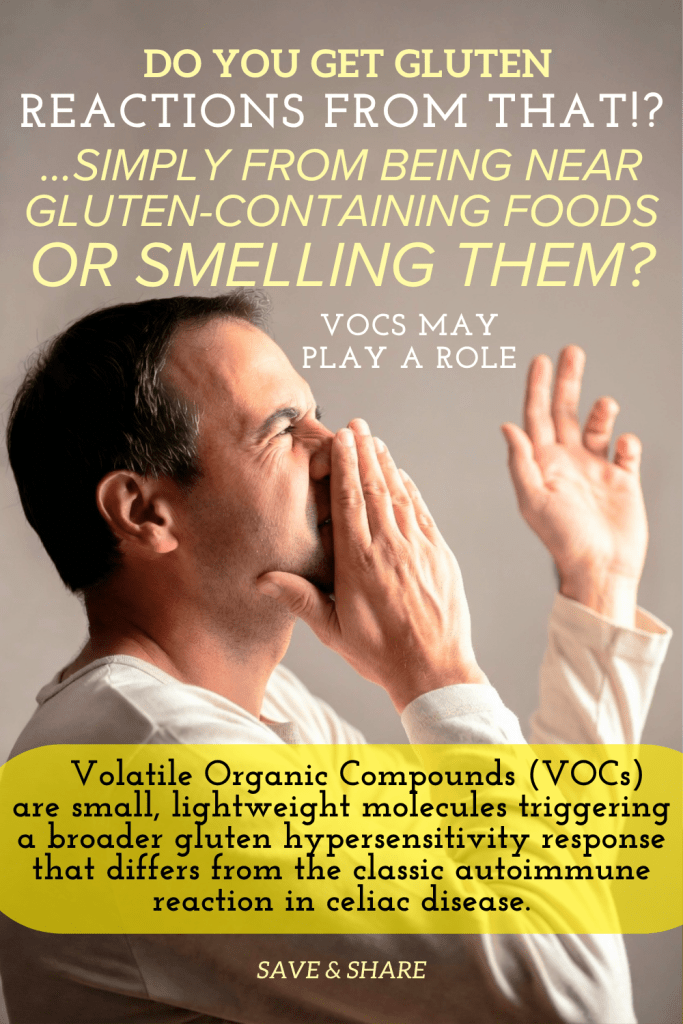
“Volatile Organic Compounds (VOCs) inhalation where gaseous, volatile air borne molecules create a smell causing sensory or inflammatory irritation to highly gluten-sensitive persons but without the actual gluten protein being involved. Wheat flour protein inhalation, where physical flour particles carrying gluten proteins are inhaled and potentially swallowed causing reactions from the flour in the air to celiac disease diagnosed people.” AI #NCGS #NonCeliacGlutenSensitivity #Glutenintolerance
Current Understanding
Research on airborne gluten exposure
Research on airborne gluten exposure has mainly focused on flour dust and its effects in occupational settings (such as baker’s asthma). The connection between specific VOCs from wheat and symptom experiences in non-celiac gluten sensitivity is still largely anecdotal and not yet firmly established in scientific literature as a primary mechanism.
VOCs and smell
VOCs are gases: They are weightless molecules that travel through the air. They do not contain gluten proteins. High concentrations of VOCs can cause headaches, dizziness, or respiratory irritation. VOCs are the volatile gases that carry the scent of baking bread, whereas gluten is a protein that remains in the physical structure of the food.” AI
You are not alone
COMMENT, SUBSCRIBE, LIKE & SHARE ☝️COMMUNITY GUIDELINES👉
 Are you hypersensitive to gluten, wheat starch and cross-contamination? Welcome to us! You are not alone in this.
Leave a comment